

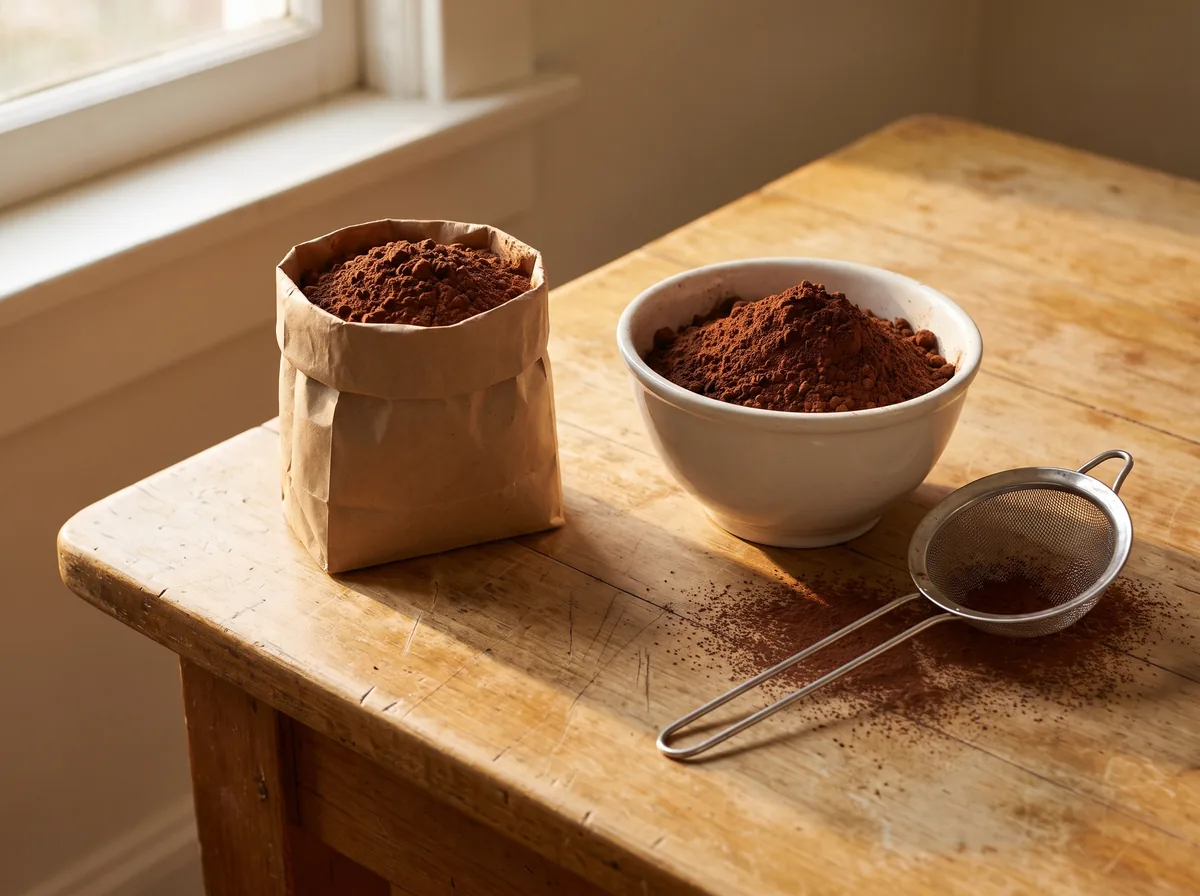
Dutch-process cocoa with 20–22 % cocoa butter: colour that stays dark in cakes and ice cream
Alkalised powder from cocoa mass, no added sugar, none of the 14 EU allergens. For gingerbread, creams, drinking cocoa and gelato. Batch lab certificate on request.
- Price
- 500 g / 270 CZK · at workshop pick-up
- Order
- +420 728 466 141 · juzlj@seznam.cz · daily 8–19
The listed price is for the goods only. Tracked delivery, packaging and insurance are extra.
Why the fat matters
Under EU law a powder needs at least 20 % cocoa butter to be called cocoa; below that it is fat-reduced cocoa. Ours has 20–22 %. More cocoa butter means a darker colour, a fuller taste and a smoother cream.
Where it comes from
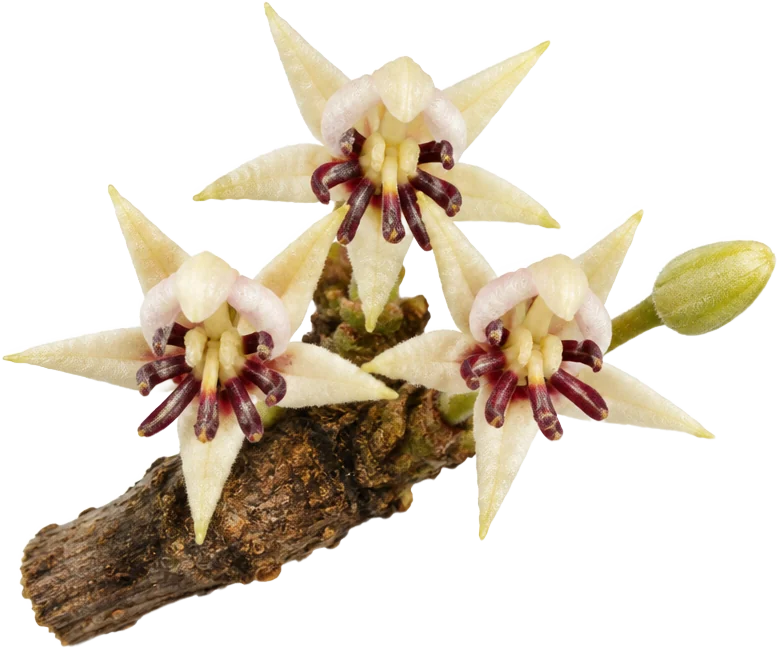
The beans are Theobroma cacao from West Africa, mainly Ivory Coast, Ghana, Cameroon and Nigeria. They are fermented in banana leaves and dried in the sun. Soils in this region are naturally low in cadmium, so our cocoa is too; the value for your batch is in the certificate of analysis, sent on request. We alkalise with natural salts to pH 7.8–8.2, which gives the deep red-brown colour and a round taste without acidity.
What is not in it
No added sugar (0.9 g of natural sugars per 100 g). None of the 14 EU allergens, gluten under 20 ppm. Vegan.
Where to use it
Baking
Gingerbread, bundt cake, brownies — batters that should stay deep cocoa after baking.
Drinks
Hot cocoa and shakes — it keeps its colour and creamy taste in milk.
Creams
Fillings and creams without added sugar in the powder.
Dusting
Slices, roulades and biscuit desserts — a dark, fine dust that does not clump.
With vanilla pudding
Stir into our vanilla pudding: chocolate cream from two mixes.
Ice cream
Smooth texture and a dark colour that does not fade in the freezer.
What's in the cocoa
Per 100 g, from the nutrition table on the pack: lots of fibre and protein, naturally low in sugar, no added sugar.
Plus magnesium 490 mg, potassium 4,400 mg and iron 31 mg per 100 g.
Values per 100 g under EU Regulation 1169/2011. You use cocoa by the spoon — per serving, the figures are a fraction of the table.
Technical data
- Cocoa butter20.0–22.0 %
- pH (10 % solution)7.8–8.2
- Finenessmin. 99.5 % below 75 µm
- Moisturemax. 5.0 %
- Shellmax. 1.75 %
- Heavy metalswithin Regulation (EU) 2023/915
- EU allergensnone of the 14
- Gluten< 20 ppm
- Dietvegan, vegetarian
Storage
Dry, away from strong smells, ideally at 15–20 °C and below 50 % humidity.
For pastry shops and gelato makers
Quantity pricing, batch certificate, pick-up or delivery. Ask on the For kitchens page.
Frequently asked questions
Why does the cocoa price change?
Cocoa is a traded commodity: weather, demand and new EU heavy-metal limits move the price. We adjust the list when our purchase price changes.
Is it raw cocoa?
No. It is alkalised (Dutch-process) and roasted. Raw cocoa is unroasted and tastes bitter and grassy; ours is smooth and rounded with roasted notes.
Does it work in ice cream?
Yes. The higher cocoa-butter content gives ice cream a smooth texture and a dark colour that does not fade in the freezer.
Where does Jůzlová cocoa come from?
West Africa, mainly Ivory Coast, Ghana, Cameroon and Nigeria. The tree is Theobroma cacao. The beans are fermented in banana leaves, sun-dried, then ground and alkalised to Dutch-process cocoa.
Why is the cadmium content of Jůzlová cocoa low?
Cadmium enters the beans from the soil. High values are typical of cocoa grown on volcanic soils in parts of Latin America, for example Peru and Ecuador. West African soils hold little cadmium, so cocoa from there is low too. The EU limit for cocoa powder is 0.60 mg/kg (Regulation (EU) 2023/915); the value for our batch is in the certificate of analysis, sent on request.
What about lead?
In West Africa lead is the metal that is watched. It stays on the bean's husk, not in the nib, and leaves with the shell before grinding. Lead is in the batch certificate as well.